



Industry Trends
Industry Trends
What are the key design points for biocompatibility in medical-grade circuit boards?
Author:RUNMTEK
Publication Date:2026-01-07
Page Views:33
1. Strictly screen biocompatible base materials and auxiliary materials. This is the foundation of biocompatibility, requiring the avoidance of the leaching of toxic and harmful substances, while ensuring long-term stability in the human body environment. - **Base material selection**: - Implantable devices should preferably use **medical-grade polyimide (PI)** or **liquid crystal polymer (LCP)**, which have high chemical stability and do not release harmful substances such as heavy metals or free monomers in body fluids and blood environments; avoid using ordinary FR-4 base materials, as the epoxy resin curing agents and flame retardants they contain may cause tissue inflammation. - Contact devices (such as monitor electrode pads) can use **biocompatible modified epoxy resin base materials**, which must pass cytotoxicity and sensitization tests. - **Auxiliary material control**: - Adhesive films and solder mask inks should be selected from **medical-grade lead-free, halogen-free products**, and must meet ISO 10993-5 (cytotoxicity) and ISO 10993-10 (sensitization) testing requirements; - Solder should preferably use **pure titanium solder** or **medical stainless steel solder** instead of traditional tin-lead solder to prevent the leaching of lead ions that can harm the human body.
2. Optimize surface treatment processes to reduce the risk of biological reactions. The roughness and plating composition of the circuit board surface directly affect protein adsorption and cell adhesion, which can lead to inflammation or thrombosis (for implantable devices). - **Plating selection**: - Instead of traditional electroplated nickel-gold, priority should be given to **electroplated pure titanium, titanium nitride (TiN)**, or **diamond-like carbon (DLC)**. These coatings are resistant to body fluid corrosion and have excellent compatibility with human tissue; - If nickel-gold plating is necessary, the thickness of the nickel layer must be strictly controlled (≤0.5μm) and **sealing treatment** must be performed to prevent nickel ions from leaching out and causing allergic reactions. - **Surface morphology control**: - The surface roughness (Ra) of the circuit board should be controlled at **0.1–0.3μm**. Too rough a surface is prone to platelet adsorption and thrombosis, while too smooth a surface may result in insufficient bonding strength with the packaging material; - Use **plasma polishing** instead of mechanical grinding to avoid residual micro-burrs and processing contaminants on the surface.
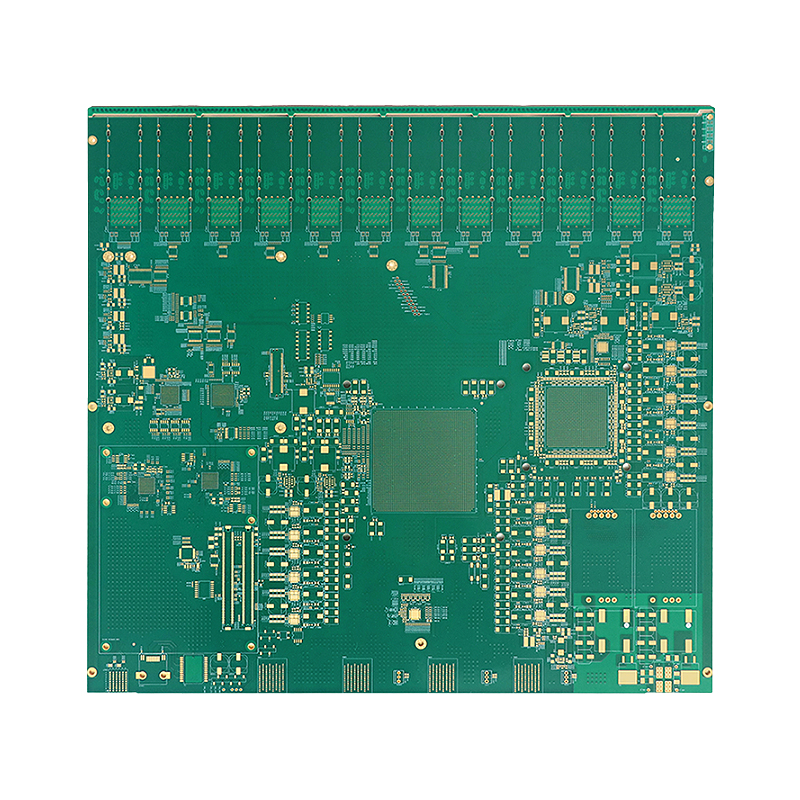
3. Strengthen structural protection to isolate the circuit from human environment. In addition to the fully sealed design of implantable devices, contact devices also need to avoid direct contact between the circuit and the human body to prevent electric leakage or chemical corrosion. - **Sealing protection for implantable devices**: - The circuit board needs to be sealed using **laser welding with a metal shell** or **completely encapsulated with biocompatible potting compound**, preferably **medical-grade silicone rubber** or **polyetheretherketone (PEEK)** material, to ensure no cracking or swelling after long-term immersion in body fluids; - The sealing structure needs to pass **accelerated aging tests** (such as simulated immersion in body fluids for more than 1000 hours) to verify no leakage. - **Isolation design for contact devices**: - Areas that come into contact with the human body need to be added with **medical-grade silicone rubber isolation layer** or **polytetrafluoroethylene (PTFE) film**, to avoid direct contact of the circuit board substrate and plating with the skin or mucous membranes; - During design, a fixed structure for the isolation layer needs to be reserved to prevent it from falling off during use.
4. Whole-process technology control to avoid secondary pollution. Pollutants (such as cleaning agent residues, dust, and microorganisms) in the production process can damage biocompatibility, necessitating the establishment of a medical-grade clean production system. - **Production environment control**: - Circuit board processing and assembly must be carried out in a **clean room of Class 10,000 or above**, and implantable products should be upgraded to Class 1,000 cleanliness; - Adopt **sterile production processes**, and perform ethylene oxide (EO) sterilization or gamma-ray sterilization after processing, ensuring no residual toxins after sterilization. - **Cleaning process optimization**: - Replace traditional organic solvent cleaning with **ultrapure water ultrasonic cleaning**, and add an **ion residue detection** step to ensure surface ion residue levels are ≤1μg/cm²; - After cleaning, use **vacuum drying** to prevent microbial growth caused by water residue.
Hot News
-
 How can we overcome the difficulties in the window-opening process of soft-hard composite boards?2026-01-07
 -
 How can we overcome the technical difficulties in microvia processing for high-level HDI boards?2026-01-07
 -
 What are the benefits of prototyping and sample making for automotive circuit boards?2026-01-07
 -
 What is the appropriate thickness of immersion gold for circuit boards2026-01-07