



Industry Trends
Industry Trends
What technical challenges does the localization substitution of PCB circuit boards face?
Author:RUNMTEK
Publication Date:2026-01-07
Page Views:27
1. Bottlenecks in the localization of high-end base materials and auxiliary materials. The core materials of PCBs (base materials, resins, fiberglass cloth, and specialty inks) directly determine product performance, and there is a significant gap in domestic materials in the high-end field. - **High-frequency and high-speed base materials**: **Low dielectric constant (Dk) and low dielectric loss (Df)** base materials (such as PTFE, modified PI, LCP) used in 5G communication, servers, and automotive millimeter-wave radar have long been monopolized by overseas manufacturers such as Rogers, Panasonic, and TE Connectivity. The dielectric performance stability of domestic base materials is poor, with significant fluctuations in Dk/Df between batches, making them unable to meet the signal integrity requirements of high-end equipment. - **Specialty auxiliary materials**: **Ultra-thin core boards (thickness < 50μm)** for IC carrier boards, **high-adhesion bonding films** for rigid-flex boards, and **biocompatible solder mask inks** for medical-grade PCBs. The temperature resistance, adhesion, and reliability of domestic products lag behind those of overseas products, and the high-end market still relies on imports. - **Pain points**: Material research and development cycles are long (typically requiring 3-5 years for verification), and downstream high-end customers are extremely strict with material certification, making it difficult for domestic materials to enter the supply chains of leading enterprises.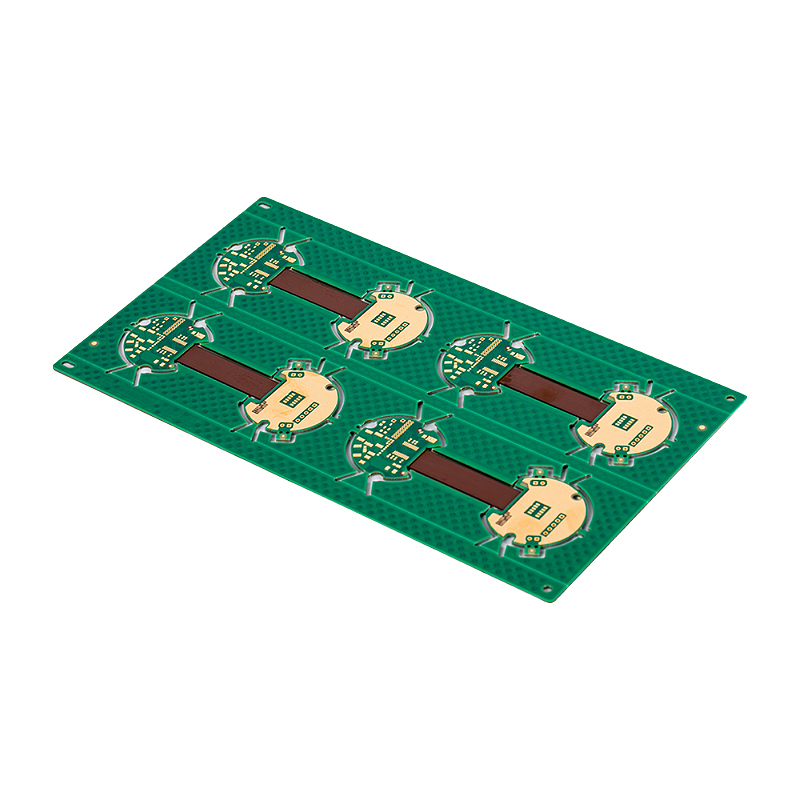 2. Technical Barriers of Advanced Process Technology As PCBs evolve towards **higher density, more layers, and thinner profiles**, the technological difficulty of advanced processes has significantly increased, and domestic manufacturers have made slow breakthroughs in high-end processes. - **Ultra-fine Circuit and Microvia Processing**: High-end IC carriers and advanced HDI boards require circuit width/spacing (L/S) to be **below 10/10μm**, with microvia diameters ≤50μm, relying on technologies such as Laser Direct Imaging (LDI), plasma etching, and femtosecond laser drilling. Domestic manufacturers have shortcomings in process parameter optimization and yield control—for example, ultra-fine circuit alignment errors are prone to exceed standards, and the wall roughness of microvia processing is difficult to meet standards, resulting in high-end product yields far lower than those of overseas manufacturers (overseas yields can reach over 90%, while domestic yields are mostly between 70%-80%). - **Multilayer Lamination and Warpage Control**: The lamination process for high-layer boards (such as server backplanes) and ultra-thin rigid-flex boards with more than 30 layers requires extremely precise control of temperature and pressure. Domestic manufacturers' lamination equipment lacks precision and digital simulation capabilities, making it difficult to solve issues such as layer deviation, warpage, and delamination, and thus unable to meet the reliability requirements of high-end products. - **Surface Treatment Process**: Automotive and medical-grade PCBs require **high corrosion resistance coatings (such as ENEPIG and chemical palladium plating)**, but domestic manufacturers' processes exhibit poor uniformity and insufficient coating adhesion, leading to coating detachment during damp heat aging and salt spray testing. 3. Shortcomings in Core Equipment and Testing Instruments The realization of advanced PCB processes relies heavily on high-end equipment, but domestic equipment lags behind overseas counterparts in terms of precision and stability. - **Core Processing Equipment**: High-precision LDI equipment, femtosecond laser drilling machines, and vacuum laminators used for high-end HDI boards and IC carriers mainly rely on overseas brands such as Orbotech from Germany, Fuji from Japan, and Israel's Orbotech. Domestic equipment has low repeatability and high failure rates, making it unable to meet large-scale production demands; even if some equipment is localized, it can only be applied to mid-to-low-end processes. - **Testing and Reliability Testing Equipment**: High-end PCBs require **online automatic optical inspection (AOI), impedance online testing systems, and high and low temperature cycle testing chambers**, but domestic equipment lacks sufficient testing accuracy and data stability. For example, in defect detection of ultra-fine circuits, domestic AOI is prone to missed inspections and misjudgments; the temperature control accuracy and cycle times of reliability testing equipment fail to meet the verification standards of high-end customers. **Pain Points**: The reliance on imported equipment leads to high production costs, and overseas manufacturers impose strict technological blockades on high-end equipment, making it difficult for domestic manufacturers to obtain the most advanced equipment technology. 4. Certification Barriers and Customer Trust Issues in the High-End Market. Localization substitution is not only a technical issue, but also faces certification thresholds and trust challenges in the downstream high-end market. **Strict Industry Certifications**: Automotive PCBs need to pass IATF 16949 certification, medical-grade PCBs need to pass ISO 13485 and FDA certification, and server PCBs need to meet supply chain certifications from giants such as Intel and NVIDIA. These certification processes are long (usually taking 1-2 years) and the testing standards are stringent. Domestic manufacturers need to invest a lot of money and time, and a single failed certification may lead to the loss of opportunities to enter the supply chain. **Customer Trust Barriers**: Downstream high-end customers (such as automotive OEMs and medical equipment manufacturers) have extremely high reliability requirements for PCBs. The cost and risk of switching suppliers are high, so they prefer to choose long-term verified overseas brands. Even if domestic manufacturers meet the technical standards, they also need to establish trust through long-term small-batch trials, resulting in a long market expansion cycle.
Hot News
-
 What are the differences between rigid-flex PCBs and FPCs? Don’t mix them up anymore!2026-01-07
 -
 What exactly is the integration of hardware and software? Why are more and more products relying on it?2026-01-07
 -
 What technical challenges does the localization substitution of PCB circuit boards face?2026-01-07
 -
 How can the interlayer bonding strength of rigid-flex boards be ensured?2026-01-07