



Company News
Company News
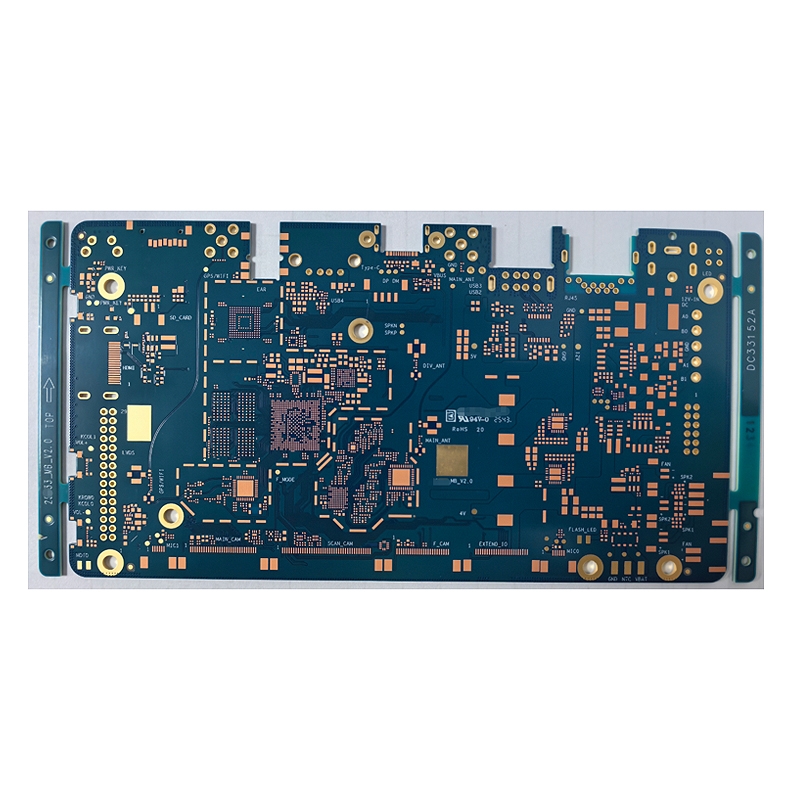
How can we overcome the technical difficulties in microvia processing for high-level HDI boards?
Author:RUNMTEK
Publication Date:2026-01-07
Page Views:29
The core challenges of microvia processing for high-level HDI boards lie in achieving smaller via diameters, high precision in via placement, controllable via wall quality, and balancing yield in mass production. To overcome these challenges, it is necessary to approach from four dimensions: technology selection, process optimization, equipment upgrading, and material adaptation. The specific analysis is as follows:
Break through the processing limits of micro-aperture and deep-to-diameter ratio
The micro-holes in high-level HDI boards are typically blind or buried holes, with a diameter requirement generally ranging from 50 to 150μm. For some high-end products, the diameter even needs to be as small as 20–30μm, while also meeting the requirement of an aspect ratio of ≥1:1. Traditional mechanical drilling cannot process such tiny holes, and the mainstream technology is laser drilling (CO₂ laser, UV laser, femtosecond laser).
Original difficulties: CO₂ lasers are prone to ablate the hole wall, leading to resin carbonization; when processing small holes with UV lasers, energy focusing is challenging, and burrs and deviations in hole diameter often appear on the hole wall; when the aspect ratio is too high, residue tends to remain at the bottom of the hole, affecting subsequent electroplating conductivity.
Breakthrough path:
By replacing traditional lasers with femtosecond lasers, the ultrashort pulses can reduce the heat-affected zone, avoiding carbonization of the hole wall and burrs;
Utilizing the laser step-by-step drilling process, precise control over hole depth and diameter is achieved through multiple small energy impacts, meeting the needs of high aspect ratios;
Equipped with online aperture detection equipment, it provides real-time feedback on aperture deviations and dynamically adjusts laser energy parameters.
Solve the problem of precise alignment of hole positions in multi-layer boards
High-level HDI boards often feature arbitrary layer interconnection structures, where microvias need to precisely penetrate designated layers. The alignment error of the via positions must be controlled within ±5μm, otherwise it may lead to short circuits or open circuits between layers.
Utilizing the Laser Direct Imaging (LDI) and Automatic Optical Inspection (AOI) system, the alignment targets on the substrate are precisely identified and positioned through high-precision visual recognition, achieving automatic and accurate alignment for laser drilling;
Optimize the lamination process by selecting prepreg (PP) with low warpability, controlling the rate of temperature and pressure rise and fall during lamination, and reducing substrate deformation;
Introduce digital twin technology to simulate the deformation of the substrate during the lamination process, correct the drilling coordinates in advance, and compensate for the layer deviation error.
Original difficulties: Layer misalignment deformation during multi-layer board lamination and differences in the thermal expansion coefficients of substrate materials can lead to deviations in preset hole positions; traditional manual alignment is inefficient and prone to large errors, making it unable to meet mass production demands.
Breakthrough path:
Ensure the quality of the hole wall and the reliability of electroplating conductivity
The roughness and cleanliness of the micropore walls directly determine the adhesion and conductivity of the electroplated copper layer. High-level HDI boards require pore walls free of resin residue and cracks, and an electroplated copper layer that is uniform and void-free.
By adopting the combined process of plasma cleaning and alkaline debinding, the high-energy particles of plasma can thoroughly remove the carbonized layer on the pore walls, while the alkaline solution dissolves resin residues, enhancing the cleanliness of the pore walls;
Optimize the electroplating process by replacing DC electroplating with pulse electroplating. Through the periodic variation of pulse current, promote uniform deposition of copper ions at the bottom of the hole, thereby solving the "dog bone" problem;
Introduce a hole wall roughness detection device to perform 3D scanning on the hole wall, ensuring that the roughness (Ra) is controlled below 0.5μm, thereby enhancing the adhesion of the copper layer.
Original difficulties: After laser drilling, resin dust and carbonized layers are easily left on the hole wall, which are difficult to be thoroughly removed by traditional wet cleaning methods. During the electroplating process of micro-holes, copper ions are difficult to deposit evenly, leading to the "dog bone" effect where the hole opening is thick while the hole bottom is thin.
Breakthrough path:
Balancing high-precision machining with mass production yield and cost
The equipment investment for microvia processing on high-level HDI boards, such as femtosecond laser drilling machines and LDI equipment, is expensive, and the processing tolerance for tiny via diameters is extremely low. Any parameter deviation can lead to via failure, directly affecting the yield rate.
Establish a process parameter database to analyze the optimal laser energy, pulse frequency, and other parameters corresponding to different materials and hole diameters through big data, thereby shortening the debugging cycle;
By integrating automated production lines, we achieve full automation of the entire process, including substrate loading, drilling, cleaning, and inspection, reducing errors caused by manual intervention;
Select models based on different application scenarios: UV laser drilling can be used for mid-to-low-end products such as consumer electronics, balancing cost and precision; femtosecond lasers are employed for high-end automotive and 5G products to ensure performance.
Original difficulties: The parameter debugging cycle for high-precision processes is long, and fluctuations in equipment stability during mass production can easily lead to yield fluctuations; the processing efficiency of high-end equipment such as femtosecond lasers is lower than that of traditional equipment, making cost control difficult.
Hot News
-
 What are the benefits of prototyping and sample making for automotive circuit boards?2026-01-07
 -
 What is the appropriate thickness of immersion gold for circuit boards2026-01-07
 -
 What are the key design points for biocompatibility in medical-grade circuit boards?2026-01-07
 -
 What are the core technological challenges of IC carrier boards?2026-01-07